
AT&T has effectively banned Bitcoin nodes via utilizing private subnets.
6 messages, 2 to 4 Sep 2015. Started by hurricanewarn1.
hurricanewarn1 (4), Matt Whitlock, Bastiaan van den Berg
First off I couldn't synch the wallet, it said no block source available and there was zero connections. Bitcoin was literally getting thottled every second. It would not even allow the connection to get block source. EVERY port was blocked, making exceptions in the router firewall did nothing. I was forced to use Blockchain.info which is a major security risk.
Secondly, I am developing a program using Bitcoin Python modules, so I login to my computer like it's a server and it was flat out rejecting the connection. I could not run any code until this got fixed, and of course needed the block source to even do anything.
If Bitcoin Core worked but 8333 was blocked I would not be emailing the list. Bitcoin Core was crippled and unusable due to the AT&T settings, and they tried hard to get me to buy monthly subscriptions to get the answer. This makes it likely that Bitcoin Core is unusable for most AT&T customers and other ISPs, hence the massive node decline. I'm sure this disrupts alot of other people besides Bitcoiners too, hence the monthly subscriptions geared towards people who can't figure out their connection situation.
AT&T literally blocked access to static IP if you don't buy one, so it wasn't a normal network setup. Unfortunately the same security used to stop hackers and viruses stops Bitcoin too, so this is probably the settings for almost every router in the country. Nodes are in fact declining worldwide, down 15% in the past year alone. Community needs to speak up and also educate before this gets completely out of control. https://getaddr.bitnodes.io/dashboard/?days=365 6,000 nodes is pathetic as it is and it's constantly declining.
-----Original Message----- From: Matt Whitlock <bip@mattwhitlock•name> To: hurricanewarn1 <hurricanewarn1@aol•com> Sent: Wed, Sep 2, 2015 4:32 am Subject: Re: [bitcoin-dev] AT&T has effectively banned Bitcoin nodes via utilizing private subnets.
Respectfully, what the heck are you talking about? Practically every home LAN runs on a private subnet. My own desktop computer has the IP address 192.168.1.34, which is in a private subnet. This doesn't prevent my Bitcoin Core node from making outbound connections to other nodes. Moreover, almost all home Internet connections in the world run on dynamically assigned IP addresses. Again, this does not cause any problems for connecting outbound to other Bitcoin nodes. It's true that your node can't accept incoming connections unless you forward port 8333 on your router to your computer, but you don't need to be able to accept incoming connections to participate in the Bitcoin network.
On Wednesday, 2 September 2015, at 3:20 am, Zach G via bitcoin-dev wrote:
Quoted text (2 lines)
>
>  I
was about to buy a VPS for Bitcoin, but I really do need Bitcoin Core for business reasons so I didn't give up. I once again thoroughly went through my computer and made sure there was nothing blocking 8333, a couple useful tools are CurrPorts and TCPView. I went through the router to make sure there was no block of port 8333. I researched everything thoroughly and was sure these were the right settings, but Bitcoin was still getting throttled every second and stuck in sys_sent, and python kept saying the target was rejecting the connection.
Quoted text (2 lines)
>
> I finally stumbled upon subnet settings, and saw that I had a
private subnet, one of the few IPs that are private on earth ( https://www.arin.net/knowledge/address_filters.html ). Uverse put all their customers on a private subnet by default. This made my computer not only hidden but unroutable for any computer on the Bitcoin network. That alone is enough to totally stop Bitcoin connections on any port, but they made it even crazier by generating a dynamic IP that changes all the time, so public IP was meaningless for my computer.
Quoted text (2 lines)
>
> I switched over to a public subnet, and right there was
a checkbox to allow incoming connections. My static IP showed for a minute then became dynamic/hidden again without me even touching anything. The final roadblock was AT&T charges $15-30/month for a public static IP, which is obviously insane and actually one could argue that violates their own terms of service. So the router was still ignoring my public IP settings simply because I wasn't paying for a public IP, and intentionally changing the settings back. I asked for a free public IP and there was no response for awhile.
Quoted text (2 lines)
>
> I found
this article on cryptocoinnews while working out: https://www.cryptocoinsnews.com/isps-intentionally-blocking-bitcoin/ It's based on the first email I sent, and was displayed prominently on their front page. I posted a tweet publicly about it which referenced AT&T ( https://twitter.com/turtlehurricane/status/638930065980551168 ) and believe it or not I had a static public IP and port 8333 was open about 1 minute later. I don't know if it was a coincidence cause I already messaged them to please do that an hour before, or if that article and tweet spurred them to action. The timing was so ridiculous I think it's the latter. Without twitter I probably wouldn't have succeeded, the technicians on twitter actually answered all my questions 24/7 unlike phone technicians which were clueless and trying to sell me a subscription for connection services help. And shout out to cryptocoinnews for making this public.
Quoted text (2 lines)
>
> So to clarify, it appears AT&T has not blocked
port 8333 itself, but rather effectively blocked all ports via the private subnet, which makes the computer hidden and unroutable for incoming peers. Although this severely limits functionality and cripples the ability to run a full node and many other programs it is understandable, since it just about 100% prevents hackers from getting in, since they can't even see your computer. What isn't understandable is that AT&T technicians did not inform me about this until I changed the settings myself, despite the fact it is a very obvious cause of ports being blocked. It's probably just ignorance since AT&T has so many complex network settings it's hard to keep track of, although I have a suspicion that someone in their command chain is withholding information in an attempt to make them buy a $15/month connection service, and once they buy that another $15-30/month is needed to get the static IP.
Quoted text (2 lines)
>
> As far as I know there is no
easy to find info on the internet about private subnets crippling the ability to use Bitcoin. I believe this needs to be explicitly said in instructions for running a full node, maybe it wasn't a problem in 2009 but now it is a major issue. On default settings Bitcoin is 100% blocked, and most people do not have the time or motivation to fix this. I talked to at least 10 AT&T technicians and worked on it 2-3 days straight, did not receive the right answer until I found it myself, although they certainly gave me some useful clues about how the network works.
Quoted text (2 lines)
>
> I am very happy that AT&T fixed it, since other ISPs like
Comcast appeared even worse. I openly talked with them about Bitcoin and they showed no prejudice, might've actually made them more willing to help me cause otherwise they would think I'm a hacker.
Quoted text (2 lines)
>
> tl;dr The good news is anyone
with AT&T can be a full node by getting a public static IP, the bad news is almost no one will figure this out unless we as a community make it well known. I guarantee node numbers will improve if this information is spread to everyone. Database size and computing expenditures is simply not the reason people don't run full nodes, it's because their ISP has made it just about impossible without shelling out nearly 100% more money per month. If you don't pay the fee AT&T would never tell you about the private subnet, at least based on my experience.
Quoted text (4 lines)
>
>
> -----Original Message-----
> From: odinn
<odinn.cyberguerrilla@riseup•net>
Quoted text (1 line)
> To: hurricanewarn1
<hurricanewarn1@aol•com>; bitcoin-dev <bitcoin-dev@lists•linuxfoundation•org>
Quoted text (1 line)
>
Sent: Tue, Sep 1, 2015 3:16 am
Quoted text (1 line)
> Subject: Re: [bitcoin-dev] AT&T has
effectively banned Bitcoin nodes by closing port 8333 via a hidden firewall in the cable box
Quoted text (8 lines)
>
>
> -----BEGIN PGP SIGNED MESSAGE-----
> Hash: SHA512
>

> Another note on this subject
> to add to the stuff people have already
>
mentioned...
Quoted text (3 lines)
>
> If you have the AT&T
> landline but don't use AT&T's
standard internet /
Quoted text (2 lines)
> tv (what they call Uverse)
> offering - that is, if you
prefer to use
Quoted text (2 lines)
> some local internet provider - you are
> probably better off
(in terms
Quoted text (2 lines)
> of avoiding not only this sort of
> blockage/censorship but as
well,
Quoted text (2 lines)
> potentially getting a better privacy policy
> that isn't going to
be
Quoted text (3 lines)
> like AT&T's long-term data retention).  You can check
> directly with
>
the various local small ISPs to see what their policies
Quoted text (2 lines)
> are
> specifically
on ports and whatnot.
Quoted text (5 lines)
>
> Ideally your ISP should let
> you:
>
> port
forward to SOMEPORTNUMBER for tcp and udp
Quoted text (3 lines)
>
> (above may or may not
> be
helpful for some if you are using
Quoted text (3 lines)
> decentralized markets)
>
> have port
8333
Quoted text (5 lines)
> open
>
> (above is for bitcoin of course)
>
> Supposing you have
FTTN because you
Quoted text (2 lines)
> are paying a local ISP for
> internet service, and that
local ISP has contracted
Quoted text (2 lines)
> with AT&T to be
> able to provide service in an
area where old-style DSL has been
Quoted text (2 lines)
> phased
> out, thus your local ISP is
essentially providing you AT&T FTTN.
Quoted text (2 lines)
> (FTTN
> is Fiber to the Node, FTTN-BP
is FTTN Bonded Pair). Even if a
Quoted text (2 lines)
> local ISP has
> its own privacy policy
posted which is different from
Quoted text (2 lines)
> AT&T, everything is
> subject to AT&T data
retention because the FTTN.
Quoted text (2 lines)
> So get yourself a VPN (or set
> up your own) for
your connection. Tor
Quoted text (4 lines)
> will run through the VPN.
>
> General
> observations
- TWC stores your IP and other stuffs for 6
Quoted text (2 lines)
> months or longer.
> Same for
Comcast. Verizon retains your stuffs for
Quoted text (2 lines)
> 18 month minimum, probably
>
longer though. Qwest/Century, 1 year.
Quoted text (1 line)
> Cox, 6 months. AT&T retains for
longer
Quoted text (2 lines)
> than a year.  This is just
> what they are telling you, the reality
is it's
Quoted text (4 lines)
> probably longer due to
> stuff like
> this:
>
https://www.lawfareblog.com/odni-and-doj-release-last-section-215-collec
Quoted text (1 line)
>
tion-order
Quoted text (15 lines)
>
>
>
>
>
>
>
>
>
> Zach
> G via bitcoin-dev:
>
> I have been struggling to get port 8333 open all year, I
> gave up
> > and
was using blockchain for months despite a strong desire to
Quoted text (2 lines)
> stay
> > on
Bitcoin Core, but now the issue has reached critical mass since
Quoted text (2 lines)
> >
> I'm
using the python Bitcoin server module. I have literally spent
Quoted text (2 lines)
> > my entire
>
day trying to open 8333, I thoroughly made sure it was
Quoted text (1 line)
> > open on the router
and
Quoted text (2 lines)
> computer and it's still closed. Strangely
> > enough I got it open for
30 seconds
Quoted text (4 lines)
> once today but something closed
> > it immediately.
> >
> >
After hours of phone
Quoted text (2 lines)
> calls and messaging AT&T finally told me the
> > truth
of what was going on, and
Quoted text (2 lines)
> only because I noticed it myself
> > and demanded
an answer. The internet is
Quoted text (2 lines)
> being routed through a
> > DVR/cable box, and
they confirmed the DVR also has a
Quoted text (2 lines)
> firewall. To
> > make this even more
absurd they refused to turn the firewall
Quoted text (2 lines)
> off
> > because it is their
equipment. So effectively they can firewall any
Quoted text (2 lines)
> >
> port they want even if
the customer asks them not to, in the
Quoted text (2 lines)
> > unlikely event
> the customer
figures it out.
Quoted text (3 lines)
> >
> > Perhaps this is the driving force behind the
>
inexplicable and
Quoted text (1 line)
> > massive decline in Bitcoin nodes. Bitcoin is being
censored
Quoted text (2 lines)
> by the
> > ISPs themselves, and they won't even tell you that. I
had to get in
Quoted text (2 lines)
> >
> touch with headquarters and threaten to rip it out of the
wall to
Quoted text (6 lines)
> > get a
> proper answer.
> >
> >
> >
> >
_______________________________________________
Quoted text (2 lines)
> bitcoin-dev mailing
> > list
bitcoin-dev@lists•linuxfoundation•org
Quoted text (2 lines)
> >
>
https://lists.linuxfoundation.org/mailman/listinfo/bitcoin-dev
Quoted text (3 lines)
> >
>
> -
42 in the whole world, and I'm one of them. Clearly that is a problem, do you even know about AT&T or are you in another country? Cause that statement is utterly ridiculous given the fact there are hundreds of millions of people using AT&T. I was simply sharing my knowledge on this issue since it poses a threat to the health of the bitcoin network, no need for personal attacks.
None of my accusations were false, there is a firewall in the DVR that is uncontrolled and all ports are blocked via private subnets and no fixed public IP allowed unless you pay. I confirmed every one of these details with AT&T technicians or I wouldn't be saying them.
-----Original Message----- From: Matt Whitlock <bip@mattwhitlock•name> To: hurricanewarn1 <hurricanewarn1@aol•com> Sent: Wed, Sep 2, 2015 5:34 am Subject: Re: [bitcoin-dev] AT&T has effectively banned Bitcoin nodes via utilizing private subnets.
According to BitNodes, 42 Bitcoin nodes are running on AT&T's network:
https://getaddr.bitnodes.io/nodes/?q=AT%26T
So I'm thinking there's nothing wrong with AT&T's default network configuration.
Frankly, the things you've been writing strongly suggest that you aren't very knowledgeable about computer networking. Instead of jumping right into making wild accusations about AT&T, you probably should find someone knowledgeable to verify your claims.
On Wednesday, 2 September 2015, at 5:20 am, Zach G via bitcoin-dev wrote:
Quoted text (1 line)
> First off I couldn't synch the wallet, it said no block source
available and there was zero connections. Bitcoin was literally getting thottled every second. It would not even allow the connection to get block source. EVERY port was blocked, making exceptions in the router firewall did nothing. I was forced to use Blockchain.info which is a major security risk.
Quoted text (2 lines)
>
> Secondly, I
am developing a program using Bitcoin Python modules, so I login to my computer like it's a server and it was flat out rejecting the connection. I could not run any code until this got fixed, and of course needed the block source to even do anything.
Quoted text (2 lines)
>
> If Bitcoin Core worked but 8333 was blocked I would not be
emailing the list. Bitcoin Core was crippled and unusable due to the AT&T settings, and they tried hard to get me to buy monthly subscriptions to get the answer. This makes it likely that Bitcoin Core is unusable for most AT&T customers and other ISPs, hence the massive node decline. I'm sure this disrupts alot of other people besides Bitcoiners too, hence the monthly subscriptions geared towards people who can't figure out their connection situation.
Quoted text (2 lines)
>
>
AT&T literally blocked access to static IP if you don't buy one, so it wasn't a normal network setup. Unfortunately the same security used to stop hackers and viruses stops Bitcoin too, so this is probably the settings for almost every router in the country. Nodes are in fact declining worldwide, down 15% in the past year alone. Community needs to speak up and also educate before this gets completely out of control. https://getaddr.bitnodes.io/dashboard/?days=365 6,000 nodes is pathetic as it is and it's constantly declining.
Quoted text (5 lines)
>
>
>
>
>
-----Original Message-----
Quoted text (2 lines)
> From: Matt Whitlock <bip@mattwhitlock•name>
> To:
hurricanewarn1 <hurricanewarn1@aol•com>
Quoted text (2 lines)
> Sent: Wed, Sep 2, 2015 4:32 am
>
Subject: Re: [bitcoin-dev] AT&T has effectively banned Bitcoin nodes via utilizing private subnets.
Quoted text (3 lines)
>
>
> Respectfully, what the heck are you
talking about? Practically every home LAN
Quoted text (1 line)
> runs on a private subnet. My own
desktop computer has the IP address
Quoted text (1 line)
> 192.168.1.34, which is in a private
subnet. This doesn't prevent my Bitcoin Core
Quoted text (1 line)
> node from making outbound
connections to other nodes. Moreover, almost all home
Quoted text (1 line)
> Internet connections in
the world run on dynamically assigned IP addresses.
Quoted text (1 line)
> Again, this does not
cause any problems for connecting outbound to other Bitcoin
Quoted text (1 line)
> nodes. It's true
that your node can't accept incoming connections unless you
Quoted text (1 line)
> forward port 8333
on your router to your computer, but you don't need to be able
Quoted text (1 line)
> to accept
incoming connections to participate in the Bitcoin network.
Quoted text (4 lines)
>
>
> On
>
Wednesday, 2 September 2015, at 3:20 am, Zach G via bitcoin-dev wrote:
Quoted text (4 lines)
> >
>
>  I
> was about to buy a VPS for Bitcoin, but I really do need Bitcoin Core
for
Quoted text (1 line)
> business reasons so I didn't give up. I once again thoroughly went
through my
Quoted text (1 line)
> computer and made sure there was nothing blocking 8333, a couple
useful tools
Quoted text (1 line)
> are CurrPorts and TCPView. I went through the router to make
sure there was no
Quoted text (1 line)
> block of port 8333. I researched everything thoroughly and
was sure these were
Quoted text (1 line)
> the right settings, but Bitcoin was still getting
throttled every second and
Quoted text (1 line)
> stuck in sys_sent, and python kept saying the
target was rejecting the
Quoted text (3 lines)
> connection.
> >
> > I finally stumbled upon
subnet settings, and saw that I had a
Quoted text (1 line)
> private subnet, one of the few IPs that
are private on earth (
Quoted text (1 line)
> https://www.arin.net/knowledge/address_filters.html ).
Uverse put all their
Quoted text (1 line)
> customers on a private subnet by default. This made my
computer not only hidden
Quoted text (1 line)
> but unroutable for any computer on the Bitcoin
network. That alone is enough to
Quoted text (1 line)
> totally stop Bitcoin connections on any
port, but they made it even crazier by
Quoted text (1 line)
> generating a dynamic IP that changes
all the time, so public IP was meaningless
Quoted text (3 lines)
> for my computer.
> >
> > I
switched over to a public subnet, and right there was
Quoted text (1 line)
> a checkbox to allow
incoming connections. My static IP showed for a minute then
Quoted text (1 line)
> became
dynamic/hidden again without me even touching anything. The final
Quoted text (1 line)
> roadblock
was AT&T charges $15-30/month for a public static IP, which is
Quoted text (1 line)
> obviously
insane and actually one could argue that violates their own terms of
Quoted text (1 line)
> service.
So the router was still ignoring my public IP settings simply because I
Quoted text (1 line)
>
wasn't paying for a public IP, and intentionally changing the settings back. I
Quoted text (3 lines)
> asked for a free public IP and there was no response for awhile.
> >
> >
I found
Quoted text (2 lines)
> this article on cryptocoinnews while working out:
>
https://www.cryptocoinsnews.com/isps-intentionally-blocking-bitcoin/ It's based
Quoted text (1 line)
> on the first email I sent, and was displayed prominently on their front
page. I
Quoted text (2 lines)
> posted a tweet publicly about it which referenced AT&T (
>
https://twitter.com/turtlehurricane/status/638930065980551168 ) and believe it
Quoted text (1 line)
> or not I had a static public IP and port 8333 was open about 1 minute
later. I
Quoted text (1 line)
> don't know if it was a coincidence cause I already messaged them to
please do
Quoted text (1 line)
> that an hour before, or if that article and tweet spurred them to
action. The
Quoted text (1 line)
> timing was so ridiculous I think it's the latter. Without twitter
I probably
Quoted text (1 line)
> wouldn't have succeeded, the technicians on twitter actually
answered all my
Quoted text (1 line)
> questions 24/7 unlike phone technicians which were clueless
and trying to sell
Quoted text (1 line)
> me a subscription for connection services help. And shout
out to cryptocoinnews
Quoted text (3 lines)
> for making this public.
> >
> > So to clarify, it
appears AT&T has not blocked
Quoted text (1 line)
> port 8333 itself, but rather effectively blocked
all ports via the private
Quoted text (1 line)
> subnet, which makes the computer hidden and
unroutable for incoming peers.
Quoted text (1 line)
> Although this severely limits functionality
and cripples the ability to run a
Quoted text (1 line)
> full node and many other programs it is
understandable, since it just about 100%
Quoted text (1 line)
> prevents hackers from getting in,
since they can't even see your computer. What
Quoted text (1 line)
> isn't understandable is that
AT&T technicians did not inform me about this until
Quoted text (1 line)
> I changed the settings
myself, despite the fact it is a very obvious cause of
Quoted text (1 line)
> ports being blocked.
It's probably just ignorance since AT&T has so many complex
Quoted text (1 line)
> network settings
it's hard to keep track of, although I have a suspicion that
Quoted text (1 line)
> someone in their
command chain is withholding information in an attempt to make
Quoted text (1 line)
> them buy a
$15/month connection service, and once they buy that another
Quoted text (1 line)
> $15-30/month is
needed to get the static IP.
Quoted text (3 lines)
> >
> > As far as I know there is no
> easy to
find info on the internet about private subnets crippling the ability to
Quoted text (1 line)
> use
Bitcoin. I believe this needs to be explicitly said in instructions for
Quoted text (1 line)
>
running a full node, maybe it wasn't a problem in 2009 but now it is a major
Quoted text (1 line)
>
issue. On default settings Bitcoin is 100% blocked, and most people do not have
Quoted text (1 line)
> the time or motivation to fix this. I talked to at least 10 AT&T
technicians and
Quoted text (1 line)
> worked on it 2-3 days straight, did not receive the right
answer until I found
Quoted text (1 line)
> it myself, although they certainly gave me some useful
clues about how the
Quoted text (3 lines)
> network works.
> >
> > I am very happy that AT&T fixed
it, since other ISPs like
Quoted text (1 line)
> Comcast appeared even worse. I openly talked with
them about Bitcoin and they
Quoted text (1 line)
> showed no prejudice, might've actually made them
more willing to help me cause
Quoted text (4 lines)
> otherwise they would think I'm a hacker.
> >

> > tl;dr The good news is anyone
> with AT&T can be a full node by getting a
public static IP, the bad news is
Quoted text (1 line)
> almost no one will figure this out unless
we as a community make it well known.
Quoted text (1 line)
> I guarantee node numbers will improve
if this information is spread to everyone.
Quoted text (1 line)
> Database size and computing
expenditures is simply not the reason people don't
Quoted text (1 line)
> run full nodes, it's
because their ISP has made it just about impossible without
Quoted text (1 line)
> shelling out
nearly 100% more money per month. If you don't pay the fee AT&T
Quoted text (1 line)
> would never
tell you about the private subnet, at least based on my
Quoted text (7 lines)
> experience.
> >
>
>
> > -----Original Message-----
> > From: odinn
>
<odinn.cyberguerrilla@riseup•net>
Quoted text (2 lines)
> > To: hurricanewarn1
>
<hurricanewarn1@aol•com>; bitcoin-dev <bitcoin-dev@lists•linuxfoundation•org>
Quoted text (5 lines)
>
>
> Sent: Tue, Sep 1, 2015 3:16 am
> > Subject: Re: [bitcoin-dev] AT&T has
>
effectively banned Bitcoin nodes by closing port 8333 via a hidden firewall in
Quoted text (9 lines)
> the cable box
> >
> >
> > -----BEGIN PGP SIGNED MESSAGE-----
> >
> >
>
> > Another note on this subject
> > to add to the stuff
people have already
Quoted text (5 lines)
> >
> mentioned...
> >
> > If you have the AT&T
> >
landline but don't use AT&T's
Quoted text (2 lines)
> standard internet /
> > tv (what they call
Uverse)
Quoted text (3 lines)
> > offering - that is, if you
> prefer to use
> > some local
internet provider - you are
Quoted text (3 lines)
> > probably better off
> (in terms
> > of
avoiding not only this sort of
Quoted text (3 lines)
> > blockage/censorship but as
> well,
> >
potentially getting a better privacy policy
Quoted text (3 lines)
> > that isn't going to
> be
> >
like AT&T's long-term data retention). You can check
Quoted text (3 lines)
> > directly with
> >
>
the various local small ISPs to see what their policies
Quoted text (2 lines)
> > are
> >
specifically
Quoted text (10 lines)
> on ports and whatnot.
> >
> > Ideally your ISP should let
>
> you:
> >
> > port
> forward to SOMEPORTNUMBER for tcp and udp
> >
> >
(above may or may not
Quoted text (3 lines)
> > be
> helpful for some if you are using
> >
decentralized markets)
Quoted text (6 lines)
> >
> > have port
> 8333
> > open
> >
> > (above
is for bitcoin of course)
Quoted text (4 lines)
> >
> > Supposing you have
> FTTN because you
> >
are paying a local ISP for
Quoted text (2 lines)
> > internet service, and that
> local ISP has
contracted
Quoted text (3 lines)
> > with AT&T to be
> > able to provide service in an
> area where
old-style DSL has been
Quoted text (3 lines)
> > phased
> > out, thus your local ISP is
>
essentially providing you AT&T FTTN.
Quoted text (2 lines)
> > (FTTN
> > is Fiber to the Node,
FTTN-BP
Quoted text (3 lines)
> is FTTN Bonded Pair).  Even if a
> > local ISP has
> > its own
privacy policy
Quoted text (3 lines)
> posted which is different from
> > AT&T, everything is
> >
subject to AT&T data
Quoted text (2 lines)
> retention because the FTTN.
> > So get yourself a VPN
(or set
Quoted text (3 lines)
> > up your own) for
> your connection. Tor
> > will run through the
VPN.
Quoted text (4 lines)
> >
> > General
> > observations
> - TWC stores your IP and other
stuffs for 6
Quoted text (3 lines)
> > months or longer.
> > Same for
> Comcast.  Verizon retains
your stuffs for
Quoted text (3 lines)
> > 18 month minimum, probably
> >
> longer though.
Qwest/Century, 1 year.
Quoted text (3 lines)
> > Cox, 6 months.  AT&T retains for
> longer
> > than
a year. This is just
Quoted text (8 lines)
> > what they are telling you, the reality
> is it's
>
> probably longer due to
> > stuff like
> > this:
> >
>
https://www.lawfareblog.com/odni-and-doj-release-last-section-215-collec
Quoted text (2 lines)
> >
>
tion-order
Quoted text (11 lines)
> >
> >
> >
> >
> >
> >
> >
> >
> >
> > Zach
> >
G via bitcoin-dev:
Quoted text (2 lines)
> >
> > I have been struggling to get port 8333 open all
year, I
Quoted text (3 lines)
> > gave up
> > > and
> was using blockchain for months despite a
strong desire to
Quoted text (3 lines)
> > stay
> > > on
> Bitcoin Core, but now the issue has
reached critical mass since
Quoted text (3 lines)
> > >
> > I'm
> using the python Bitcoin server
module. I have literally spent
Quoted text (3 lines)
> > > my entire
> >
> day trying to open 8333,
I thoroughly made sure it was
Quoted text (3 lines)
> > > open on the router
> and
> > computer and
it's still closed. Strangely
Quoted text (3 lines)
> > > enough I got it open for
> 30 seconds
> >
once today but something closed
Quoted text (4 lines)
> > > it immediately.
> > >
> > >
> After
hours of phone
Quoted text (3 lines)
> > calls and messaging AT&T finally told me the
> > > truth
>
of what was going on, and
Quoted text (2 lines)
> > only because I noticed it myself
> > > and
demanded
Quoted text (3 lines)
> an answer. The internet is
> > being routed through a
> > >
DVR/cable box, and
Quoted text (3 lines)
> they confirmed the DVR also has a
> > firewall. To
> > >
make this even more
Quoted text (3 lines)
> absurd they refused to turn the firewall
> > off
> > >
because it is their
Quoted text (6 lines)
> equipment. So effectively they can firewall any
> > >
>
> port they want even if
> the customer asks them not to, in the
> > >
unlikely event
Quoted text (4 lines)
> > the customer
> figures it out.
> > >
> > > Perhaps this
is the driving force behind the
Quoted text (3 lines)
> >
> inexplicable and
> > > massive decline
in Bitcoin nodes. Bitcoin is being
Quoted text (3 lines)
> censored
> > by the
> > > ISPs
themselves, and they won't even tell you that. I
Quoted text (3 lines)
> had to get in
> > >
> >
touch with headquarters and threaten to rip it out of the
Quoted text (2 lines)
> wall to
> > > get
a
Quoted text (6 lines)
> > proper answer.
> > >
> > >
> > >
> > >
>
_______________________________________________
Quoted text (2 lines)
> > bitcoin-dev mailing
> > >
list
Quoted text (4 lines)
> bitcoin-dev@lists•linuxfoundation•org
> > >
> >
>
https://lists.linuxfoundation.org/mailman/listinfo/bitcoin-dev
Quoted text (8 lines)
> > >
> >
>
> -
> --
> >
> > http://abis.io ~
> > "a protocol concept to enable
decentralization
Quoted text (3 lines)
> >
> and
> > expansion of a giving economy, and a new
social
Quoted text (5 lines)
> > good"
> >
> https://keybase.io/odinn
> > -----BEGIN PGP
> >
SIGNATURE-----
Quoted text (3 lines)
> >
> >
>
iQEcBAEBCgAGBQJV5VDeAAoJEGxwq/inSG8CvkIH/jy4Vo+My3xeBdvFQmxkJWyQ
Quoted text (2 lines)
> >
>
U5mv2zWEvBYw71Xy1EDzQY1AhEBmatUU1eu2AbOqXdUR4511FxCNzFmTxy6roEiz
Quoted text (2 lines)
> >
>
EehBkvXNbBCbEzLRisjxuQw34OKM+xfieCqE1mzJok2uSdLMMQLcbWL1/k3/OmS5
Quoted text (2 lines)
> >
>
9O9z/wMXqU1Jc19MTK+vF1Lz5ilnRn3hEbTaCN3ivYnYFa0DpBH9r0Y07UcoJ6Wr
Quoted text (2 lines)
> >
>
ui/x0sSSuupAGzOkZ75HQ8yeQXckeAu6TB3/jE8QEqNUmAJkmR8eK4ofXZWFrIjy
Quoted text (2 lines)
> >
>
mOKeQL4c+jRQnTR8pt+y89g2QIpzFoHaV5T+WvQuC1t8xNOrxLgYFXWgl0dhoYE=
Quoted text (9 lines)
> > =UCLC
>
>
> -----END
> > PGP SIGNATURE-----
> >
> >
>
>
I've been trying to keep our discussion off-list because it is off-topic, but you keep adding the list back on in your replies.
http://steamforge.net/wiki/images/2/29/Settings-Firewall-Advanced.png

Settings > Firewall > Advanced Configuration > Outbound Protocol Control > All Other Protocols
That's all you had to do.
On Wednesday, 2 September 2015, at 9:44 am, Zach G via bitcoin-dev wrote:
Quoted text (62 lines)
> 42 in the whole world, and I'm one of them. Clearly that is a problem, do you even know about AT&T or are you in another country? Cause that statement is utterly ridiculous given the fact there are hundreds of millions of people using AT&T. I was simply sharing my knowledge on this issue since it poses a threat to the health of the bitcoin network, no need for personal attacks.
>
> None of my accusations were false, there is a firewall in the DVR that is uncontrolled and all ports are blocked via private subnets and no fixed public IP allowed unless you pay. I confirmed every one of these details with AT&T technicians or I wouldn't be saying them.
>
>
>
>
>
>
>
> -----Original Message-----
> From: Matt Whitlock <bip@mattwhitlock•name>
> To: hurricanewarn1 <hurricanewarn1@aol•com>
> Sent: Wed, Sep 2, 2015 5:34 am
> Subject: Re: [bitcoin-dev] AT&T has effectively banned Bitcoin nodes via utilizing private subnets.
>
>
> According to BitNodes, 42 Bitcoin nodes are running on AT&T's
> network:
>
> https://getaddr.bitnodes.io/nodes/?q=AT%26T
>
> So I'm thinking
> there's nothing wrong with AT&T's default network configuration.
>
> Frankly, the
> things you've been writing strongly suggest that you aren't very knowledgeable
> about computer networking. Instead of jumping right into making wild accusations
> about AT&T, you probably should find someone knowledgeable to verify your
> claims.
>
>
> On Wednesday, 2 September 2015, at 5:20 am, Zach G via bitcoin-dev
> wrote:
> > First off I couldn't synch the wallet, it said no block source
> available and there was zero connections. Bitcoin was literally getting thottled
> every second. It would not even allow the connection to get block source. EVERY
> port was blocked, making exceptions in the router firewall did nothing. I was
> forced to use Blockchain.info which is a major security risk.
> >
> > Secondly, I
> am developing a program using Bitcoin Python modules, so I login to my computer
> like it's a server and it was flat out rejecting the connection. I could not run
> any code until this got fixed, and of course needed the block source to even do
> anything.
> >
> > If Bitcoin Core worked but 8333 was blocked I would not be
> emailing the list. Bitcoin Core was crippled and unusable due to the AT&T
> settings, and they tried hard to get me to buy monthly subscriptions to get the
> answer. This makes it likely that Bitcoin Core is unusable for most AT&T
> customers and other ISPs, hence the massive node decline. I'm sure this disrupts
> alot of other people besides Bitcoiners too, hence the monthly subscriptions
> geared towards people who can't figure out their connection situation.
> >
> >
> AT&T literally blocked access to static IP if you don't buy one, so it wasn't a
> normal network setup. Unfortunately the same security used to stop hackers and
> viruses stops Bitcoin too, so this is probably the settings for almost every
> router in the country. Nodes are in fact declining worldwide, down 15% in the
> past year alone. Community needs to speak up and also educate before this gets
> completely out of control. https://getaddr.bitnodes.io/dashboard/?days=365 6,000
> nodes is pathetic as it is and it's constantly declining.
When you assume you make an ass out of you and me. That page doesn't even exist in my router, I don't have 2wire. The router I have is the one everyone is getting from uverse.
Literally everything you said is incorrect. It is completely on topic as it pertains to Bitcoin Core functionality, 42 connections is nothing, and that's not how you fix it. If you're gonna call me out for being wrong at least be correct! I spent a lot of time fixing this and the info is useful cause this problem happens to a lot of people, so why obfuscate it with this nonsense.
AT&T u-verse as it is now is near impossible for bitcoin nodes, 42 in the world is absolutely pathetic considering they are among the top 2 ISPs in the USA. Thanks for proving my point.
-----Original Message----- From: Matt Whitlock <bip@mattwhitlock•name> To: hurricanewarn1 <hurricanewarn1@aol•com> Cc: bitcoin-dev <bitcoin-dev@lists•linuxfoundation•org> Sent: Wed, Sep 2, 2015 3:21 pm Subject: Re: [bitcoin-dev] AT&T has effectively banned Bitcoin nodes via utilizing private subnets.
I've been trying to keep our discussion off-list because it is off-topic, but you keep adding the list back on in your replies.
http://steamforge.net/wiki/images/2/29/Settings-Firewall-Advanced.png
Settings
Quoted text (1 line)
> Firewall > Advanced Configuration > Outbound Protocol Control > All Other
Protocols
That's all you had to do.
On Wednesday, 2 September 2015, at 9:44 am, Zach G via bitcoin-dev wrote:
Quoted text (1 line)
> 42 in the whole world, and I'm one of
them. Clearly that is a problem, do you even know about AT&T or are you in another country? Cause that statement is utterly ridiculous given the fact there are hundreds of millions of people using AT&T. I was simply sharing my knowledge on this issue since it poses a threat to the health of the bitcoin network, no need for personal attacks.
Quoted text (2 lines)
>
> None of my accusations were false, there is a
firewall in the DVR that is uncontrolled and all ports are blocked via private subnets and no fixed public IP allowed unless you pay. I confirmed every one of these details with AT&T technicians or I wouldn't be saying them.
Quoted text (9 lines)
>
>
>

>
>
>
>
> -----Original Message-----
> From: Matt Whitlock
<bip@mattwhitlock•name>
Quoted text (2 lines)
> To: hurricanewarn1 <hurricanewarn1@aol•com>
> Sent:
Wed, Sep 2, 2015 5:34 am
Quoted text (1 line)
> Subject: Re: [bitcoin-dev] AT&T has effectively
banned Bitcoin nodes via utilizing private subnets.
Quoted text (3 lines)
>
>
> According to
BitNodes, 42 Bitcoin nodes are running on AT&T's
Quoted text (3 lines)
> network:
>
>
https://getaddr.bitnodes.io/nodes/?q=AT%26T
Quoted text (3 lines)
>
> So I'm thinking
> there's
nothing wrong with AT&T's default network configuration.
Quoted text (3 lines)
>
> Frankly, the
>
things you've been writing strongly suggest that you aren't very knowledgeable
Quoted text (1 line)
> about computer networking. Instead of jumping right into making
wild accusations
Quoted text (1 line)
> about AT&T, you probably should find someone knowledgeable
to verify your
Quoted text (4 lines)
> claims.
>
>
> On Wednesday, 2 September 2015, at 5:20 am,
Zach G via bitcoin-dev
Quoted text (2 lines)
> wrote:
> > First off I couldn't synch the wallet, it
said no block source
Quoted text (1 line)
> available and there was zero connections. Bitcoin was
literally getting thottled
Quoted text (1 line)
> every second. It would not even allow the
connection to get block source. EVERY
Quoted text (1 line)
> port was blocked, making exceptions in
the router firewall did nothing. I was
Quoted text (1 line)
> forced to use Blockchain.info which is
a major security risk.
Quoted text (3 lines)
> >
> > Secondly, I
> am developing a program using
Bitcoin Python modules, so I login to my computer
Quoted text (1 line)
> like it's a server and it
was flat out rejecting the connection. I could not run
Quoted text (1 line)
> any code until this
got fixed, and of course needed the block source to even do
Quoted text (4 lines)
> anything.
> >

> > If Bitcoin Core worked but 8333 was blocked I would not be
> emailing the
list. Bitcoin Core was crippled and unusable due to the AT&T
Quoted text (1 line)
> settings, and
they tried hard to get me to buy monthly subscriptions to get the
Quoted text (1 line)
> answer.
This makes it likely that Bitcoin Core is unusable for most AT&T
Quoted text (1 line)
> customers
and other ISPs, hence the massive node decline. I'm sure this disrupts
Quoted text (1 line)
> alot
of other people besides Bitcoiners too, hence the monthly subscriptions
Quoted text (1 line)
>
geared towards people who can't figure out their connection situation.
Quoted text (4 lines)
> >
>
>
> AT&T literally blocked access to static IP if you don't buy one, so it
wasn't a
Quoted text (1 line)
> normal network setup. Unfortunately the same security used to stop
hackers and
Quoted text (1 line)
> viruses stops Bitcoin too, so this is probably the settings for
almost every
Quoted text (1 line)
> router in the country. Nodes are in fact declining worldwide,
down 15% in the
Quoted text (1 line)
> past year alone. Community needs to speak up and also educate
before this gets
Quoted text (1 line)
> completely out of control.
https://getaddr.bitnodes.io/dashboard/?days=365 6,000
Quoted text (1 line)
> nodes is pathetic as it
is and it's constantly declining.
I sent out an email after 48 hours of dealing with trying to open up my ports for Bitcoin, I was quite frustrated and angry since I had to call like 10 times and I was making zero progress. Most of the AT&T people didn't give me any helpful clues on how to fix the situation. The original email described how there is a firewall in the DVR, and I thought it was blocking the ports. It is true there is a uncontrollable firewall in the DVR, it is false this blocks 8333.
The actual problem is due to AT&T Uverse customers being forced to use a private dynamic IP, the IP is literally hidden from the internet, so it isn't possible to send any requests at it. It will literally ignore pings across all ports. So the solution is to switch to public static IP and make sure you allow incoming traffic.
It's not so simple though, AT&T will not let you have a public static IP without paying. I've had my router reset 10 times today by AT&T (probably automatically) and it comes back with a private dynamic IP. Then I have to reset it to use public IP and that lasts less than an hour. It literally went from open to closed while typing this email... the IP address went from public to private dynamic.
https://i.gyazo.com/3c732687fc3d21acb7d62f6d0e23a346.png

This is making using Bitcoin Core almost impossible. I'm at least getting some synch now but maybe a few days of blocks the entire day, cause I can't sit here all day with the computer and keep fixing it.
The proof is in the pudding, there are 37 nodes using AT&T in the ENTIRE world. AT&T is a massive ISP so this is strong evidence that using Bitcoin Core as a full node on AT&T is extremely difficult and actually just about impossible.
https://i.gyazo.com/90beebe056f5fc338165e8d200536c06.png
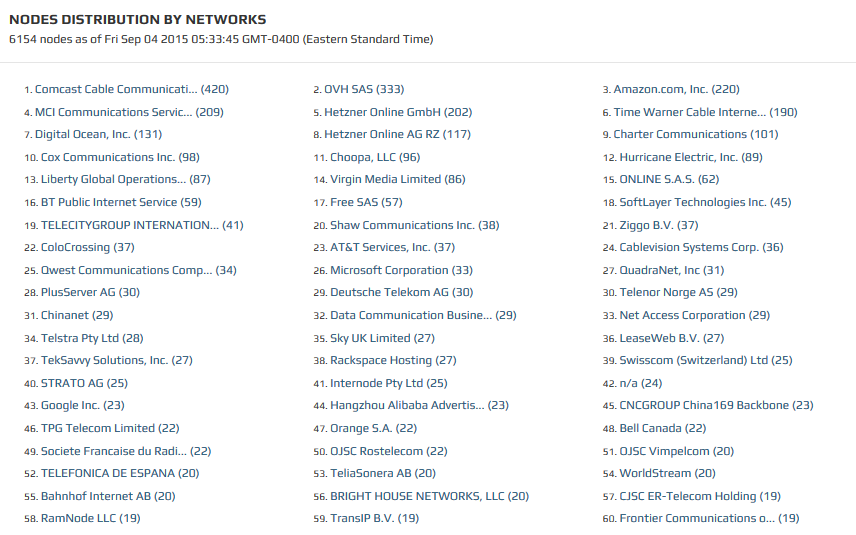
The other big ISPs have pathetic numbers also due to the same sort've things that AT&T does, but at least Comcast has 400 nodes. AT&T is much harder to use than any other ISP I've dealt with when it comes to Bitcoin Core.
I apologize for sending out the wrong info the first time, although it is still worth noting the DVR firewall is out of your control, which might be a problem if not now then in the future. In any case AT&T has effectively blocked full nodes for Bitcoin Core via the private subnet, and the disability to change it to public without paying $15 more per month, and buying a $15 connection service so they will give you that info (if you dont pay the connection 'specialists' hang up on you).
It is important to note this is not Bitcoin specific, but effects every program that depends on freely open ports. I don't think AT&T has anything against Bitcoin, it's just their security settings and policies have disabled Bitcoin Core for most customers. Also important to note this isn't a problem specific to AT&T, all the big ISPs are doing similar things. I believe the changes in ISP protocol are the main driving force behind the massive decline in Bitcoin nodes. Another big factor is firewalls, most people can't even remove the firewalls enough to open ports at will. The community needs to educate people on how to use Bitcoin Core when facing these intensifying security measures, or the decline of node numbers will continue.
On Fri, Sep 4, 2015 at 11:55 AM, Zach G via bitcoin-dev < bitcoin-dev@lists•linuxfoundation•org> wrote:
Quoted text (2 lines)
> It's not so simple though, AT&T will not let you have a public static IP
> without paying.
Not sure, but, what part of bitcoin development are you addressing in this email?